December 29, 2025
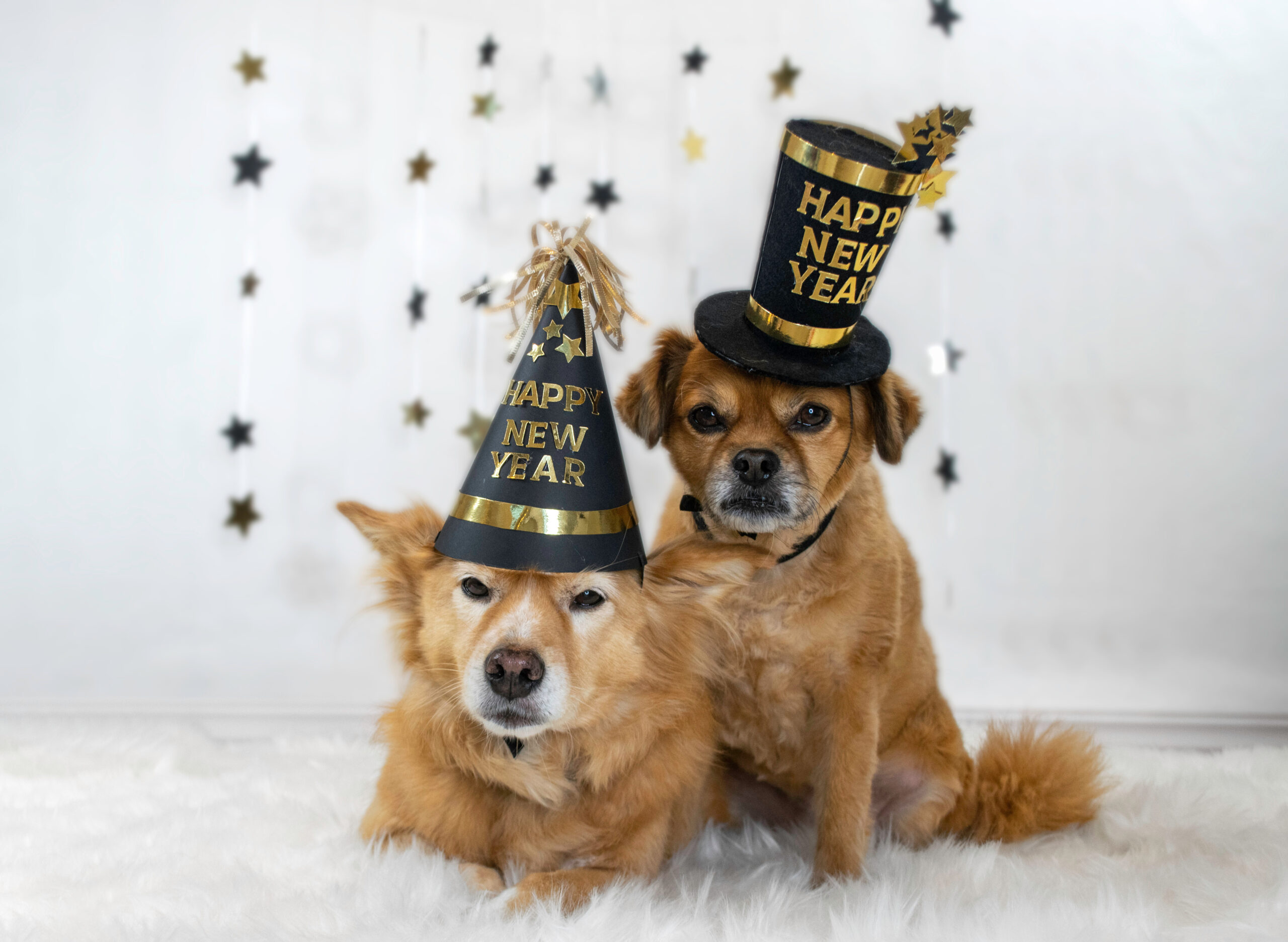
As we prepare to wind down the holiday season with the celebration of New Year’s Eve, keep furry friends in mind while planning festivities. Just like with the 4th of July, New Year’s Eve often contains changes in routine and loud noises that are scary for pets.
Fireworks and big crowds are no fun for pets
The bright lights and loud noises of fireworks and large crowds are often frightening and disorienting for pets. A dog’s ears, on average, are four times more sensitive than humans, so no matter how well-adapted you think your animal may be, it is usually better to keep them at home in a quiet and calming place. If fireworks usually cause your pet to become frightened and anxious, talk to your veterinarian ahead of time about supplements, pheromones, or medications that may help your pet to feel calmer and more relaxed.
Create a safe space
Perhaps the best thing you can do for your pet on New Year’s Eve is to provide a quiet, cozy spot for them to spend their time. This space could include a familiar blanket, favorite toys, water and a white noise machine or TV if firework noises make them anxious. Creating a safe haven for them away from the hustle and bustle can be just what they need.
Don’t let your pet eat food they normally wouldn’t
Foods pets normally don’t eat can give them severe indigestion and diarrhea, and this is particularly true for older animals with specific nutritional requirements. Foods like onions, chocolate, coffee, avocado, grapes, raisins and salt can be toxic to pets. If you plan to drink alcoholic beverages, ensure they are out of a pet’s reach; if ingested, alcohol has the potential to poison your pets.
Keep party decor out of reach
Balloons, streamers, party hats and confetti can be unhealthy for an animal if ingested. If your pet is likely to sample any of these, make sure the decor is out of their reach.
Don’t leave them unattended outdoors
In many communities, New Year’s Eve is celebrated with fireworks, banging pots and pans, and other unfamiliar loud noises. These noises can be frightening to your pets, and there’s a chance they would try to escape from your yard (even a fenced-in one) if they’re scared. Pets should be kept indoors as much as possible, aside from supervised potty breaks.
Don’t forget the collar
If you’re hosting, repeated opening of your door for friends and family means there’s a chance your pet can slip away. If that happens, it’s important to make sure you can be contacted! Ensure your pet’s ID tag contains up-to-date contact information and, if you haven’t already, consider microchipping as an important way to keep track of your furry friend.
Recent news
New Year’s Eve Safety Tips for Pets
Holiday Pet Safety Tips
Thanksgiving Safety Tips for Pets
How to Keep Your Pets Cool in Extreme Heat
SNIP & Chip Your Pet for Only $50
How to Choose What Pet Food is Right for Your Furry Friend
Got Skunked? How To Get The Stink Out
17 Toxic Plants to Watch Out For
February is Pet Dental Health Month!
Celebrating the Holidays with Pets: Fun and Safe Ways to Include Them